
Divorce, American Style
Looking for something to watch for Valentine's Day? I'd recommend a double feature about divorce - An Unmarried Woman and Waiting to Exhale.

Boy meets girl. He asks her out and pays for the first date. They fall in love and get married. Two children arrive next, along with a beautifully decorated home. Summer vacations. Packed lunches. Coordinated school drop-offs. Romantic dinners on weeknights. A satisfying sex life. Stability. Comfort. Bliss. And then one day, suddenly, it all comes to a brutal end.
Valentine’s Day is this week and it got me thinking about the myth of romance in movies. That cinematic myth is as fantastical as Valentine’s Day — an arbitrary, capitalistic holiday. I love a romantic movie as much as the next person, but if I had to declare a defining movie that’s honest about love, it would be a movie about divorce, or rather a movie about what happens to a person when divorce happens to them.
Paul Mazursky’s An Unmarried Woman is canon to me. It has everything I love in movies — late 70s New York, a perfect script, a great score, and a lead character who navigates who she wants to be just as a central navigating system in her life (in this case, marriage) has come to an end. It’s a masterful unromantic romantic comedy thanks to Mazursky’s observed direction and the easy charm of Jill Clayburgh as Erica Benton, a dutiful wife whose world is completely rattled when her husband, Martin (Michael Murphy), tells her he’s leaving her for a younger woman.
Recently I watched a double bill of An Unmarried Woman coupled with Forest Whitaker’s Waiting to Exhale, another beloved tale of women on the verge of self discovery in the face of nasty break ups. It’s noteworthy that these films frame the experience of divorce from the perspective of the women in the relationship, and yet these films are directed by men. Are they sincere attempts to observe women rebuilding themselves? Both films stoke the fantasy and the realities of the fallout after romantic rupture. One story centers a white woman in the 70s; the other follows Black women in the 90s. In both cases, divorce is less a failure and more a path to reconstructing identity through the unconditional support of friends — and a really good therapist.
An Unmarried Woman opens on a bright wintry day. The camera tracks the skyline of New York City on the east side as the bouncy saxophone led score by Bill Conti drops us into an average morning for Erica and Martin. They’re jogging side by side along the East River. These are people who very much live out in the world they inhabit. Martin accidentally steps in dog shit and makes a joke about how Erica sounds like his mother. They return to their cozy apartment that has incredible views of the city, where they make love and get ready to go about their work days. It’s a lived in relationship that feels pure and recognizable. In most of these early scenes Martin and Erica are framed as equals in shots or Martin occupies the center of the frame when they sit for breakfast as a family. At this time, men were the centers of their families, they were the breadwinners (Erica works part-time) and much of domestic life and labor was oriented around them and their needs — later that night Martin wants to have sex again in the same day, initially Erica isn’t interested but ultimately gives in.
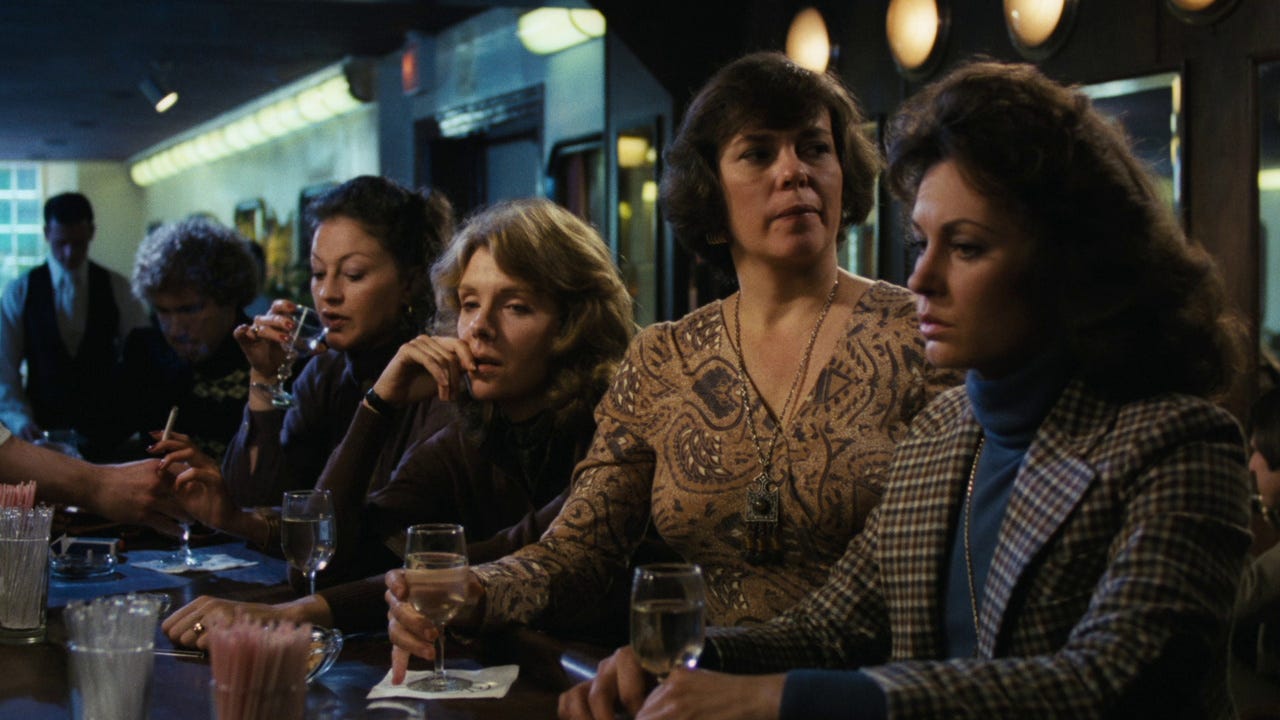
The first few scenes in the film firmly establish that Erica in a sense has it all — the loving husband, the precocious kid, the handsomely decorated apartment, but the film makes it clear that Erica is her own person and has an enriched life outside of her domestic setting. She works in an art gallery in SoHo, mostly tending to administrative duties and rebuffing the advances of her chauvinistic colleague Charlie (Cliff Gorman). After work, she regularly meets for drinks and casual conversation with a group of close female friends — Elaine, Sue, and Jeanette. They speak frankly about the state of their marriages and sex lives. The close blocking in this scene illustrates their bond as they sit around a table and enjoy salads and white wine. Female friendship as a judgment free zone and a reprieve from men would have seemed quite radical to show as totally normal in a mainstream American film in the late 70s.
The next day, Erica meets Martin for lunch in a crowded diner in the middle of their work day where they talk about their summer vacation plans. As they attempt to walk back to their respective jobs, Martin tearfully tells Erica he’s leaving her. I’ve always thought it’s such an inspired and darkly comic choice that Martin breaks up with Erica on the street in broad daylight where there’s nowhere to hide. The city still goes on around them while Martin makes his confession, and they’re expected to just go back to work like the devastation wouldn’t be debilitating in this moment. There are several scenes in the film where heightened emotion and experiences tend to take place in public settings — a bad first date in Chinatown for Erica, a triumphant spin around the ice skating rink at Rockefeller Center with Erica and her girlfriends, afternoon ice cream in Washington Square Park with her new lover, Erica and Martin saying their final goodbyes outside of their apartment building, and the film’s finale in the streets of SoHo.
Piece by piece Erica starts to put her life back together in the wake of her separation. The film doesn’t show a drawn out battle in court or how Martin is happily spending his life with his new partner. Those conventions are left to the imagination and instead we spend time in the grief of the breakup with Erica where she encounters a series of hostile men (her doctor, her coworker, her first date post divorce, a random man in the bar where she meets her friends) and she decides to pursue therapy.
In one of the film’s strongest scenes, Erica tells her new therapist Tanya (Penelope Russianoff) about a core memory she has about getting her period for the first time as a teenager and how it made her feel. As Clayburgh brilliantly delivers this monologue, she does a lot with her eyes and hands in this scene as her character works through her unresolved feelings of feeling less than, afraid, and full of guilt. In telling this story, she realizes that in some ways maybe her real problem isn’t the dissolution of her marriage but her very real fear of being alone. She’s lived a comfortable life of seventeen years of marriage, and thus she likely doesn’t know who she is outside of being a wife. It’s a mix of complex emotions that Clayburgh plays out on her face — hard truths that Erica is only just discovering in this moment.
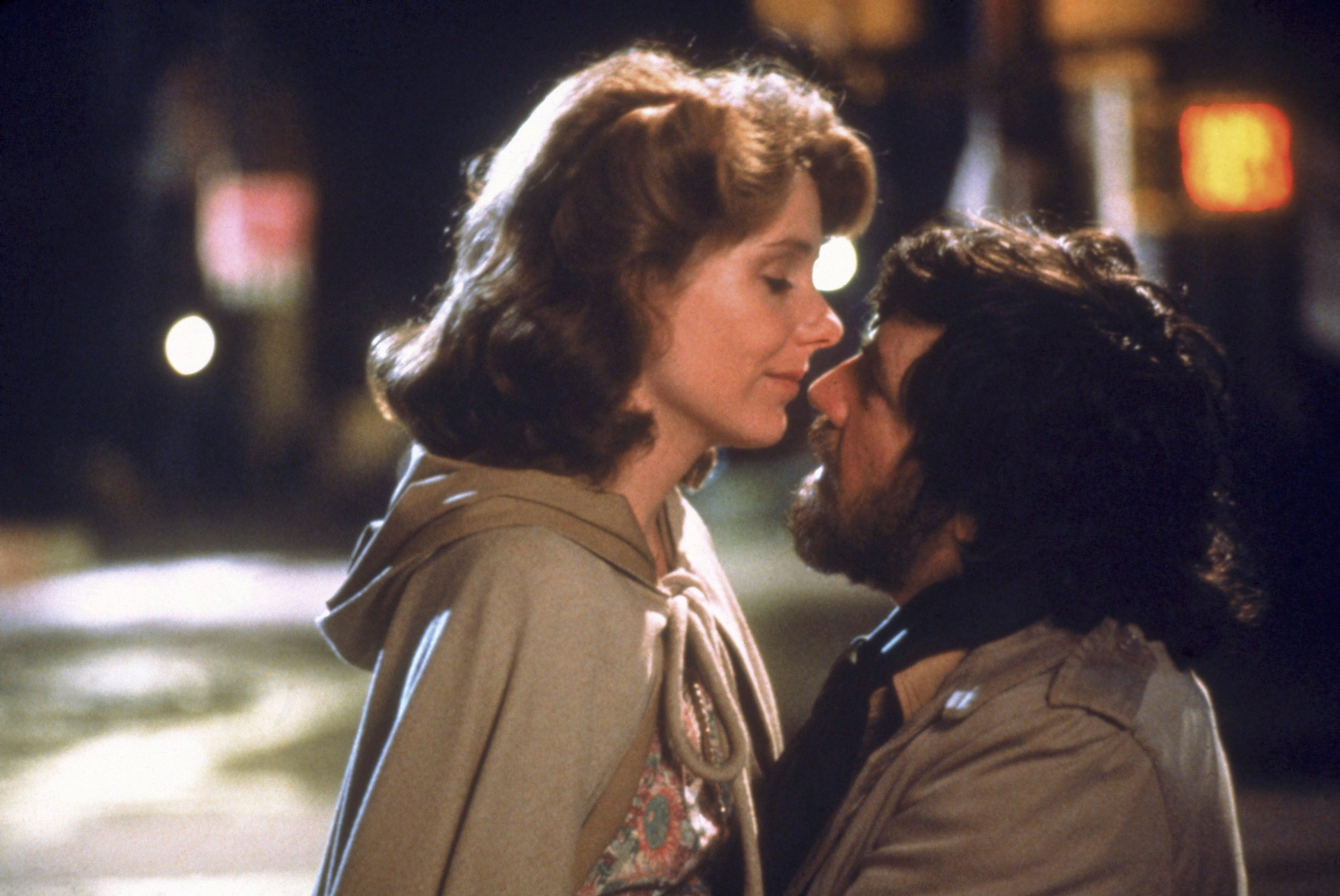
Tanya recommends that Erica get “into the stream of life” and take “risks” with new men, but on her terms. About an hour into the film, Erica meets Saul (Alan Bates), an abstract expressionist painter in the style of Paul Jenkins. They have a one night stand in the middle of the day to largely satisfy Erica’s needs. Later on they romantically walk late at night in SoHo after a party and Saul discusses a potential future he sees with Erica. Imagine a handsome, tender artist professing his desire for you on a dimly lit street while you passionately kiss. It’s a fantasy that Erica could easily fall into but she’s cautious to enmesh herself in another relationship where she would lose all sense of her newly gained self. Saul wants to run away with Erica to Vermont, but Erica persists with her new life as a single and self-actualized woman. She needs to continue her journey of finding herself instead of finding a new husband.
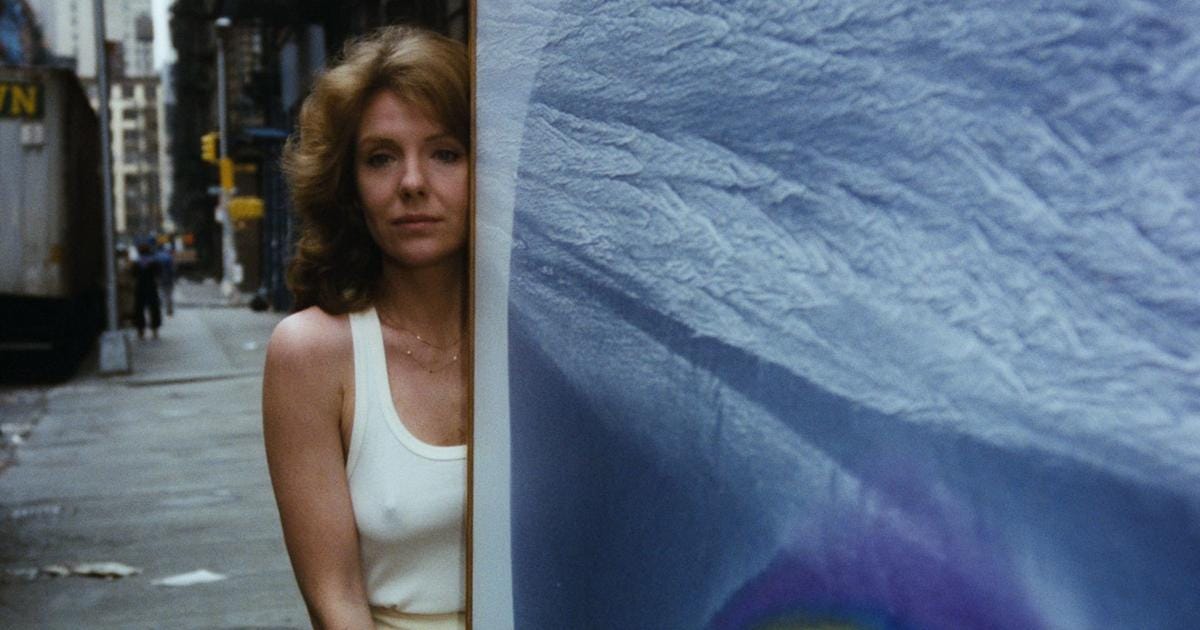
Perhaps the revelatory romance in An Unmarried Woman isn’t the one between a man and a woman, but rather the one Erica has with herself. The textures of what helps Erica put herself back together also are distinctive in this film (mostly scenes with other women) — a brief scene with her daughter as they sing “Maybe I’m Amazed” at the piano in their home, a scene with her girlfriends where they confront their feelings of sadness and notions of female beauty, and a scene towards the end between Erica and her friend Elaine in her new apartment where she questions if Saul is The One. The film is interested in unpacking the burden Erica carried in her marriage and what she carries forward as she moves ahead in the stream of life. This is represented literally when Saul gives Erica one of his paintings as he leaves for Vermont. The sight of Erica attempting to walk through the streets of SoHo with a large scale painting as the Bill Conti score swells suggests that Erica will be okay in spite of the uncertainty ahead. The end credits begin with a freeze frame of Erica in the street with her painting, she’s officially and proudly marked An Unmarried Woman.
The fear of being alone isn’t just for Erica, but in watching Waiting to Exhale that fear impacts the four main characters in that film, albeit a bit differently.
Savannah (Whitney Houston), Bernadine (Angela Bassett), Gloria (Loretta Devine), and Robin (Lela Rochon) are another version of having it all for women, specifically for Black women. Adapted from the book of the same name by Terry McMillan, Waiting to Exhale hones in on a group of middle- to upper-middle class Black women in Arizona. They each have their own thriving roles in career and domestic life, but it’s clear from the beginning that these women are in pursuit of a fulfilling romance and a varnished idea of what that is supposed to look like for women with means. If their white counterparts can have the marriage, the husband, the kids, the house, why can’t they?
If An Unmarried Woman was radical in its depiction of divorce in the 70s when women were culturally expected to stay in their marriages not just for the fear of being alone but also the real fear of not having financial or structural resources as an independent person, then Waiting to Exhale feels transgressive for seeing contemporary life for college educated, working adult Black women in the 90s. Representation was and is key to the film’s success as there hadn’t been a film quite like it before that beyond the race and gender of its leads, it showed them as complex human beings who process the challenges of marriage, work life, raising children, and discovering the reality of what they want instead of being focused on the fantasy. They have sex when they want to, although I noticed on this re-watch that most of the men they have sex with in this film are either terrible lovers or they’re unavailable in some other capacity, whether emotionally or they’re already married. Black women are dimensional, multi-layered individuals who this film carefully allows the space and grace for them to exhale.
Bernadine’s marriage quickly unravels when we meet her character. Her husband John (Michael Beach) coldly tells her on New Year’s Eve that he’s leaving her for a white woman and eventually we learn it’s his plan to take ownership of their homes and primary custody of their children. Naturally, this enrages Bernadine to the point where we see her get the big payback of taking all of John’s material possessions and setting them ablaze in his luxury car. This scene is interesting in a myriad of ways because the production design shows us the domestic opulence in which she has become accustomed, it’s a crowd pleasing revenge fantasy that women can easily see themselves in, and Bernadine talks to herself and reveals many details about her life with John that justify her actions (she helped him build his business, she made love to him 732 times over the course of their eleven year marriage, she tolerated his smug ass, she has a business degree that seems to go unused now). She’s put in all of the emotional and domestic labor to get all of the things she felt she was owed and deserved and now those things seem meaningless and not guaranteed.

Bernadine leans on her female friends for solace in some ways like Erica does in An Unmarried Woman. I found their friendship dynamic to be in contrast to Erica’s inner circle who don’t judge her for going to therapy or having casual sex as a single woman, only one friend suggests that Erica might consider sticking it out because all marriages have rough patches. When Bernadine sheds her long locks thanks to her friend and hairdresser Gloria, she decides in her new identity she wants to meet new men and ends up sleeping with one who is assumed to be married. Gloria passes judgment later on when she and Bernadine go to a local fair. She’s disappointed in her friend and guilts her for what society could think about her, but Bernadine simply states that the one night stand was on her terms as she “needed to get laid.” Their friendship carries on from this point, and I was struck that this movie shows a rare thing about friendship (especially between women) in that you can judge your friend for an act that is outside of your moral compass and still remain a supportive, lifelong friend.
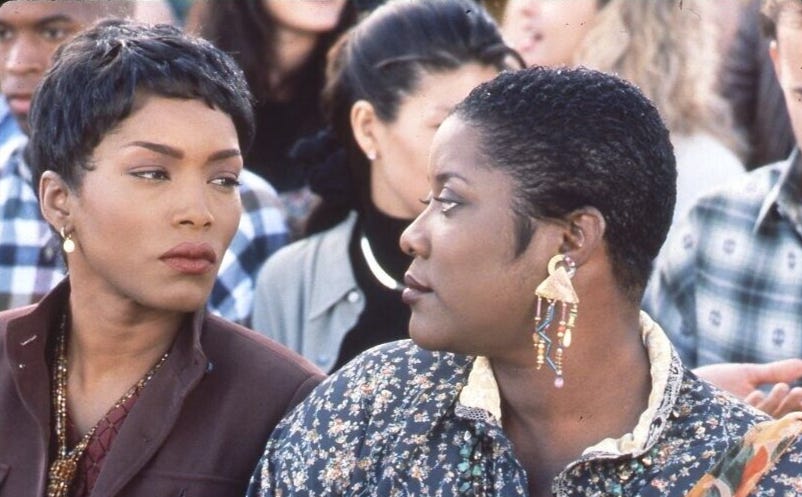
Through Bernadine’s divorce journey we see how the other women deal with their own growth and shifting perspectives on relationships. Savannah has the career, but not the man to make her and her mother happy. Robin also has the career, but she’s laser focused on finding Mr. Right although she tends to attract men where love is conditional. Gloria as a single mother deals with issues of abandonment because her ex-husband is gay, and the only man in her life where the relationship is in her control is with her teenage son. By the film’s end, these women learn that they can’t ultimately get what they want until they stop focusing on the fantasy and see things for how they actually are. They have each other and again, they have themselves and those two relationships can help reshape the burden of relationships with men. Similar to Erica, their ending is hopeful but ambiguous as they sing along to a Roberta Flack song in a car with Bernadine firmly in the driver’s seat.
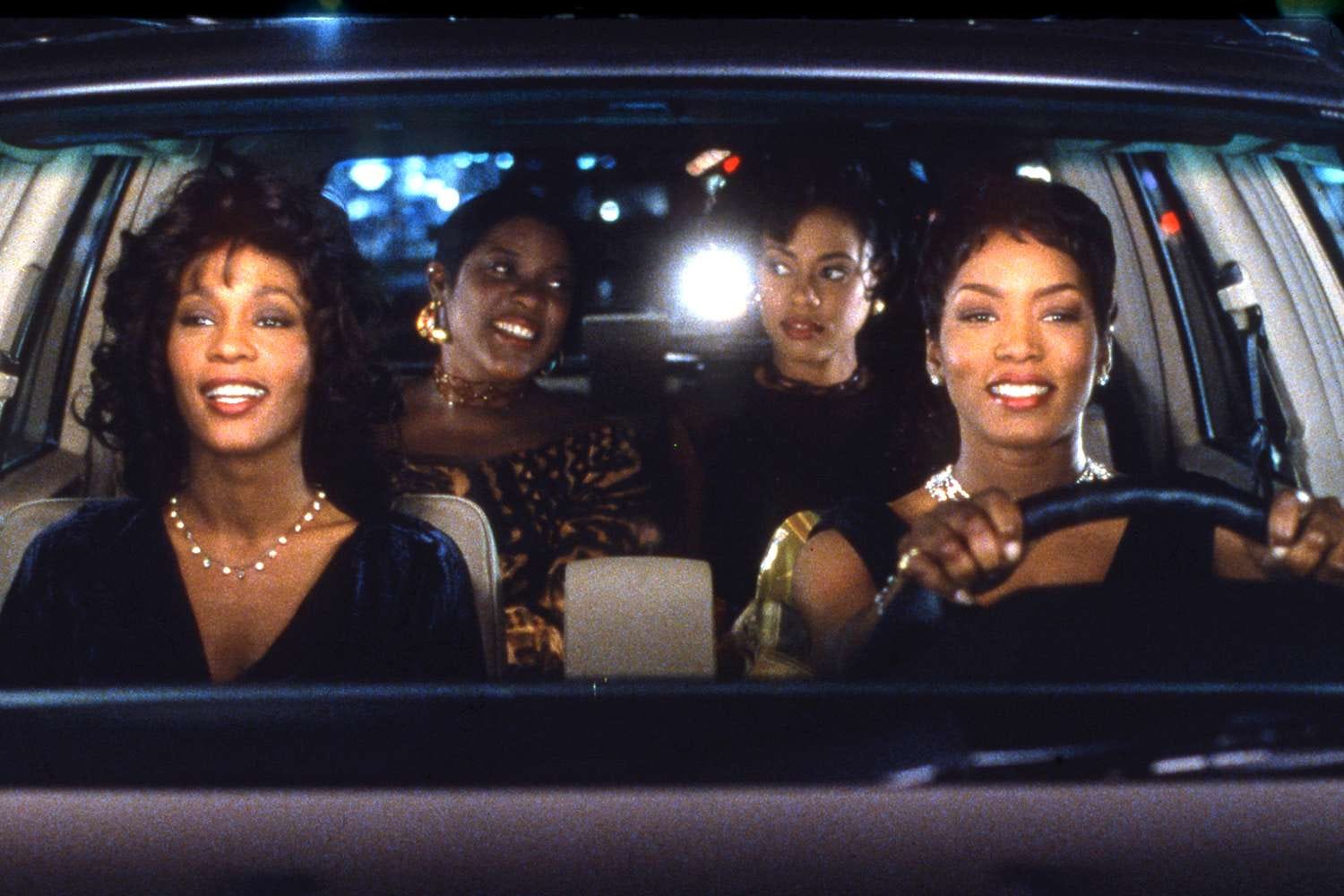
If I have a quibble with Waiting to Exhale (blasphemous, I know!), it’s that the flat lighting scheme makes the film look like a studio multi-cam sitcom. The real locations of apartments, restaurants, streets, and offices in An Unmarried Woman ground the audience in a very real story, whereas the soft lighting of built sets in Waiting to Exhale keeps the movie at a bit of a distance for me. But I also understand that for a movie with four female Black leads in the 90s, it was critical to not shroud these women in low-lit shadows or overly naturalistic lighting, we needed to see them as whole individuals with brown to dark brown skin tones, something Hollywood hadn’t really gotten right up to that point.
The use of contemporary r&b music, courtesy of the film’s soundtrack producer Babyface, underscores almost all of the film’s scenes to reveal elements of the characters’ psychological and relational ideas about romantic narratives. In one scene, Savannah notes that maybe their desire for love is fueled by these songs that on the surface provide them with comfort but ultimately it’s a reminder of what they don’t have.
What makes the endings of An Unmarried Woman and Waiting to Exhale so powerful is that they refuse the usual romantic closure. Instead of pairing off into the sunset, these films end with women negotiating the logistics of their own lives — where they live, what they own, what they choose to keep, and who they surround themselves with. They’re no longer empty because they don’t have men in their immediate futures; they’re fuller. They learn they can love, survive endings, and still move forward on their own terms. That growth is funny, complicated, melodramatic, and cause for introspection and relief in community.
Valentine’s Day insists on a certain kind of ending: the kiss, the epic embrace in the rain, the freeze frame on the walk into the horizon. But the most honest films about love understand that romance is not defined by who stays — it’s defined by what remains when someone leaves. In both An Unmarried Woman and Waiting to Exhale, marriage functions as a system, a structure that organizes identity and stability. When that system collapses, what’s revealed is not failure, but autonomy. Erica and Savannah awaken to what has been in front of them all along. They are not paired off. They are not rescued. They are in forward motion. They’re in the stream of life. And perhaps that is the truest romantic ending of all — not waiting to be chosen, but choosing yourself.
I was your lover and your secretare workin every day of the weeeeeek
A companion piece to this should be how every girl and gay boy in the 90s knew the soundtrack by heart and was belting grown people’s business sitting up in their rooms.